
Search Oklahoma Warrant Records
Oklahoma warrant records are public court documents that anyone can search through the state's official systems. The Oklahoma State Courts Network provides free access to warrant information across all 77 counties from one centralized portal. You can search by party name, case number, or traffic citation to find active warrants, bench warrants, and arrest warrant status in district court dockets. County sheriff's offices also maintain active warrant lists and can confirm or help clear outstanding warrants. The OSBI CHIRP system offers a deeper name-based criminal history search for a small fee when you need more than case docket details.
Oklahoma Warrant Records Overview
How to Search Oklahoma Warrant Records Online
The fastest way to look up warrant records in Oklahoma is through the OSCN docket search. It covers all 77 counties in a single system and is free to use. You search by last name and first name, then narrow results using filters for party type, case type, and filing date ranges. Once you find a case, the docket shows all filings, court dates, motions, and any warrant activity tied to that record. Active warrants may appear within criminal case files. Not every active warrant shows up in a standard name search, since some warrants won't reflect until 24 to 72 hours after a clerk processes them.
Case type codes help you find the right records. CF stands for criminal felony. CM is criminal misdemeanor. TR is traffic. Warrant activity appears most often in CF and CM cases. You can filter by these codes to skip unrelated records. The system also lets you search across appellate courts, district courts, and municipal courts from one interface. Juvenile records are sealed by law and won't appear regardless of search method. Sealed and expunged cases also won't show in public searches.
OSCN is completely free for viewing case records and docket information. You only pay fees when requesting certified copies or paying court fines directly through the system.
The OSCN Docket Search is the official public gateway to Oklahoma court warrant records, maintained by the Oklahoma Supreme Court.
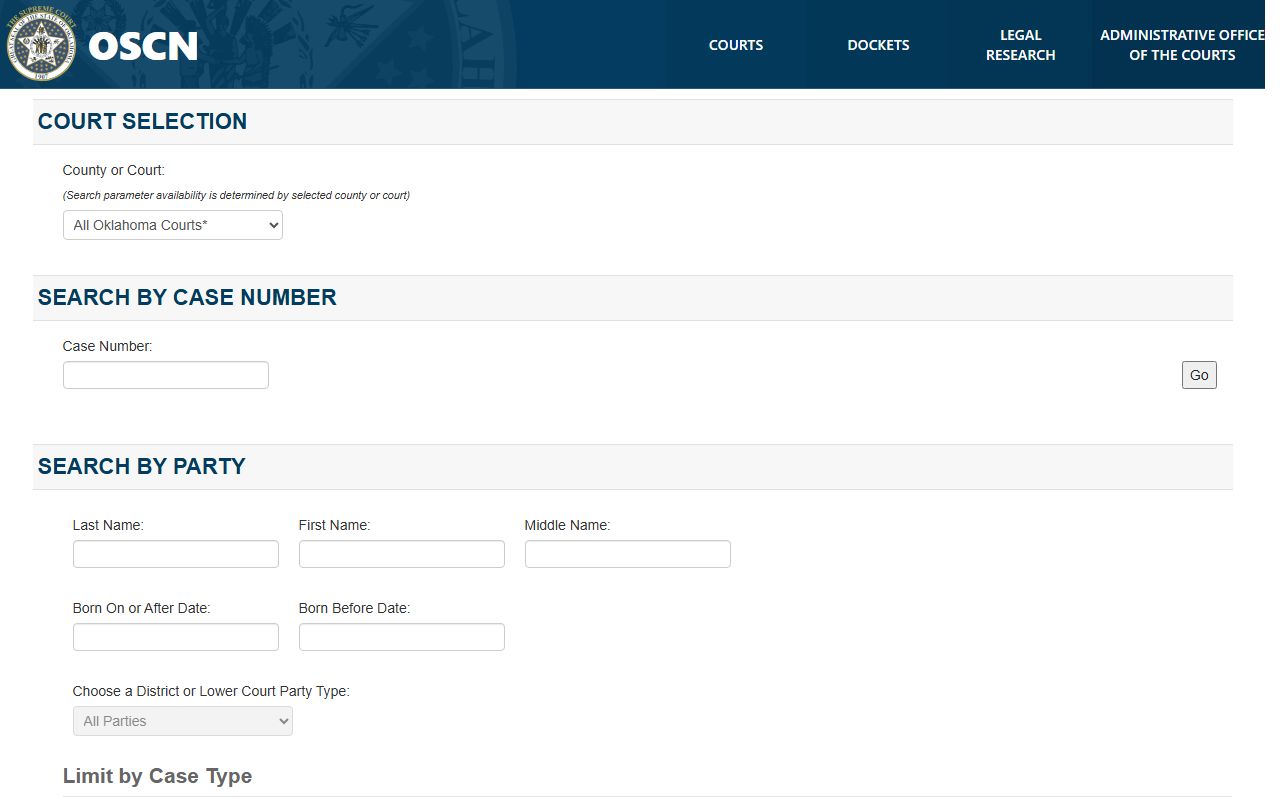
Searches can be filtered by county, case type, party type, and date range to quickly narrow results across all 77 Oklahoma counties.
The main OSCN website is the Oklahoma Supreme Court's official public records network, covering district and appellate courts across the state.
Users can download available court documents directly from OSCN, which saves trips to the courthouse for basic warrant status checks.
Oklahoma Warrant Types and What They Mean
Oklahoma courts issue several distinct types of warrants. Each one carries a different legal basis and resolution process. Knowing the type of warrant involved helps you figure out where to search and what steps are needed to clear it.
Arrest warrants are the most common type. A judge or magistrate issues one when probable cause exists that a person committed a crime. Under Title 22, Section 22-171 of the Oklahoma Statutes, arrest warrants can be issued after a complaint is filed with a magistrate or after the district attorney files an information. These warrants stay active until the arrest is made or the court recalls them. There is no automatic expiration date for arrest warrants.
Bench warrants come directly from a judge. They are issued when someone fails to appear at a scheduled court date, ignores a court order, or fails to pay fines. Bench warrants are common in both criminal and civil cases. Like arrest warrants, they remain open until resolved or recalled. The form requirements for bench warrants in felony cases are set out in Section 22-456 of the Oklahoma Statutes.
Search warrants allow law enforcement to search a specific location and seize evidence. Officers must return the warrant to the issuing magistrate with a written inventory of anything taken, as required by Section 22-1233. Search warrants expire if not used within 10 days of issuance. Other warrant types include material witness warrants, alias warrants when originals expire without execution, and governor's warrants for extradition from other states.
The warrant search guide at www-oscn.us walks through different search methods available in Oklahoma, from OSCN to sheriff office contacts.
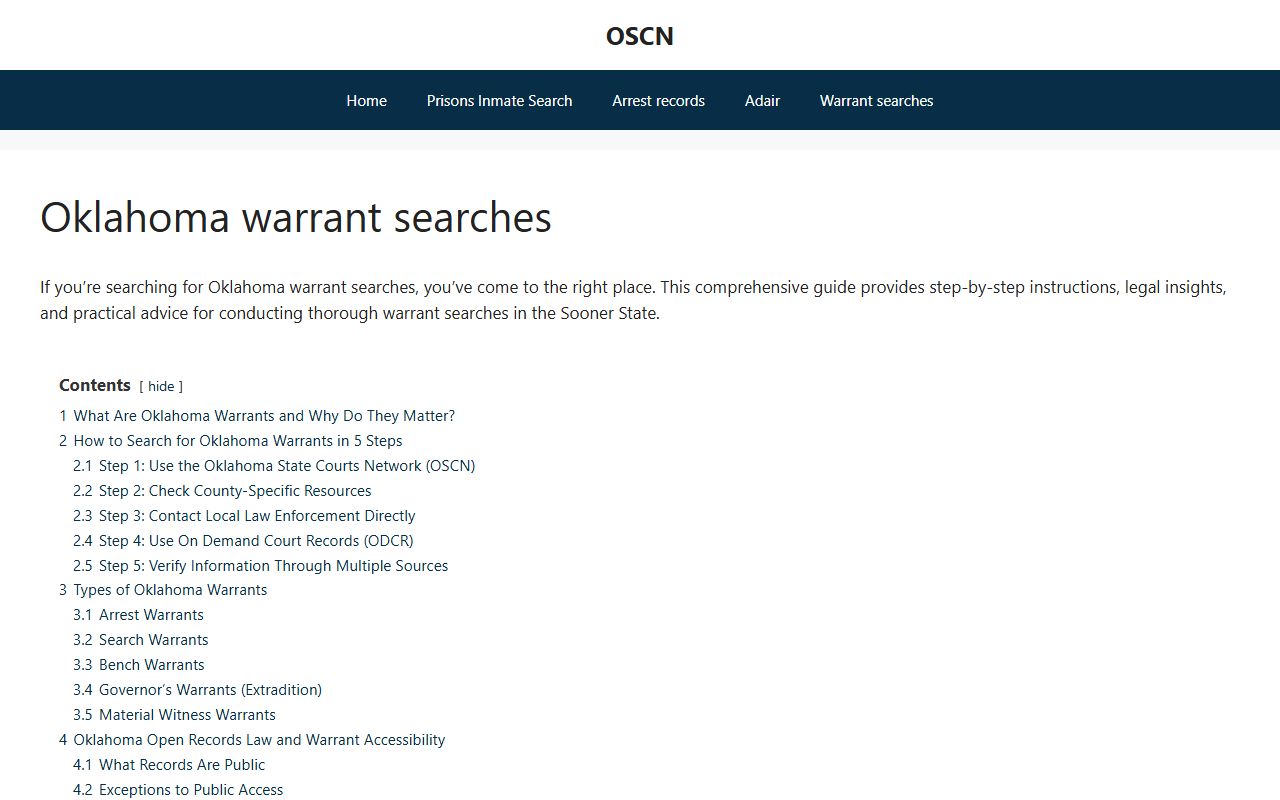
Verifying warrant status often requires checking both the county district court system and the local sheriff's warrant division, as not all warrants appear in OSCN searches.
OSBI Criminal History and Warrant Records
The Oklahoma State Bureau of Investigation (OSBI) maintains the state's central criminal history database. This includes arrest records, conviction records, and warrant-related activity statewide. The OSBI database is separate from OSCN and provides a different angle on a person's record. If a warrant resulted in an arrest and booking, that event appears in OSBI records once the arresting agency reports it.
The OSBI runs a system called CHIRP, which stands for Criminal History Information Request Portal. You access it at chirp.osbi.ok.gov. CHIRP lets anyone run a name-based criminal history check for $15 per search. The fee is non-refundable even if no records come back. Payment is required at the time of the search. Detailed reports and certified copies carry additional fees. Fingerprint-based searches are available through the OSBI's main office at 6600 North Harvey, Oklahoma City, OK 73116, but require advance appointments by calling 405-848-6724. Main office hours run 8:00 a.m. to 5:00 p.m., Monday through Friday, with cashier services from 9:00 a.m. to 4:00 p.m.
The OSBI homepage is the starting point for criminal history searches, fingerprint services, and other statewide law enforcement resources.
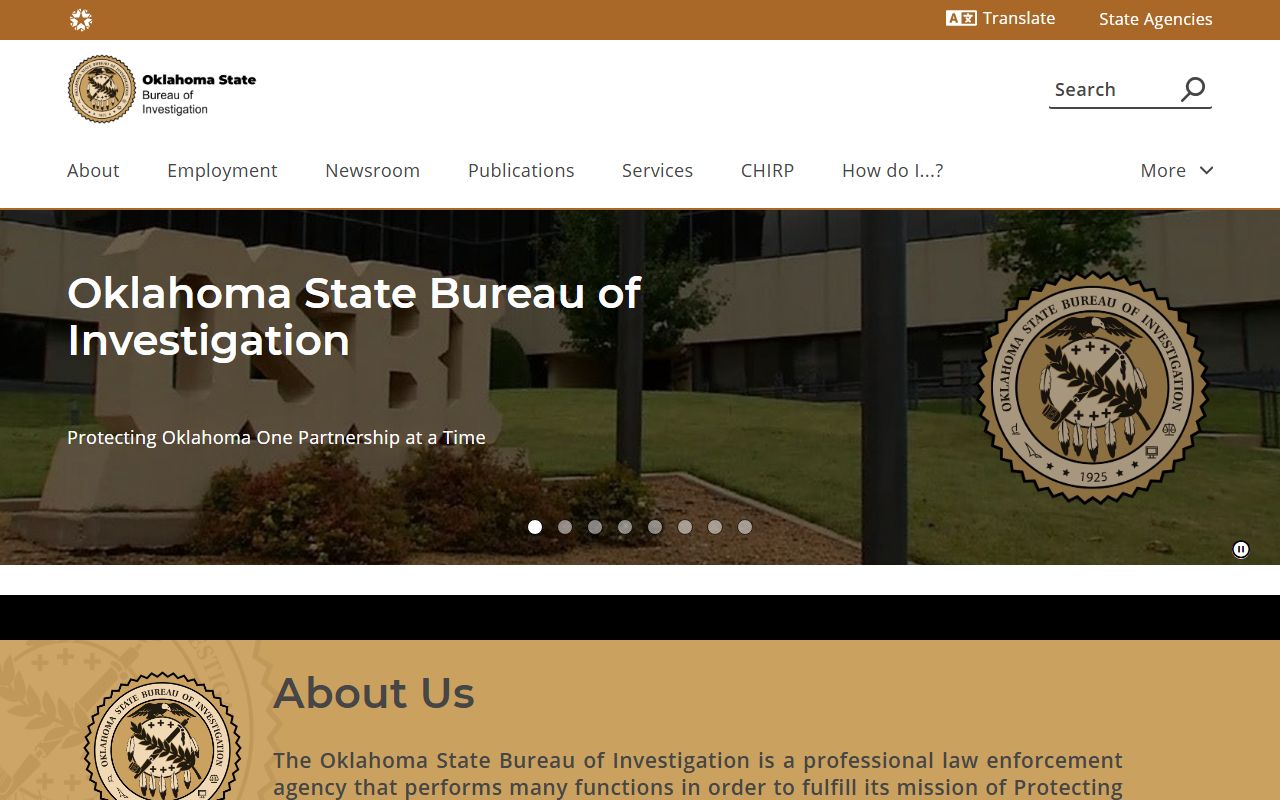
OSBI's mission centers on protecting Oklahoma through investigative services, forensic labs, and the central criminal history repository used by courts and agencies across all 77 counties.
The CHIRP system is OSBI's online portal for name-based criminal history requests, giving public access to statewide records for a $15 search fee.
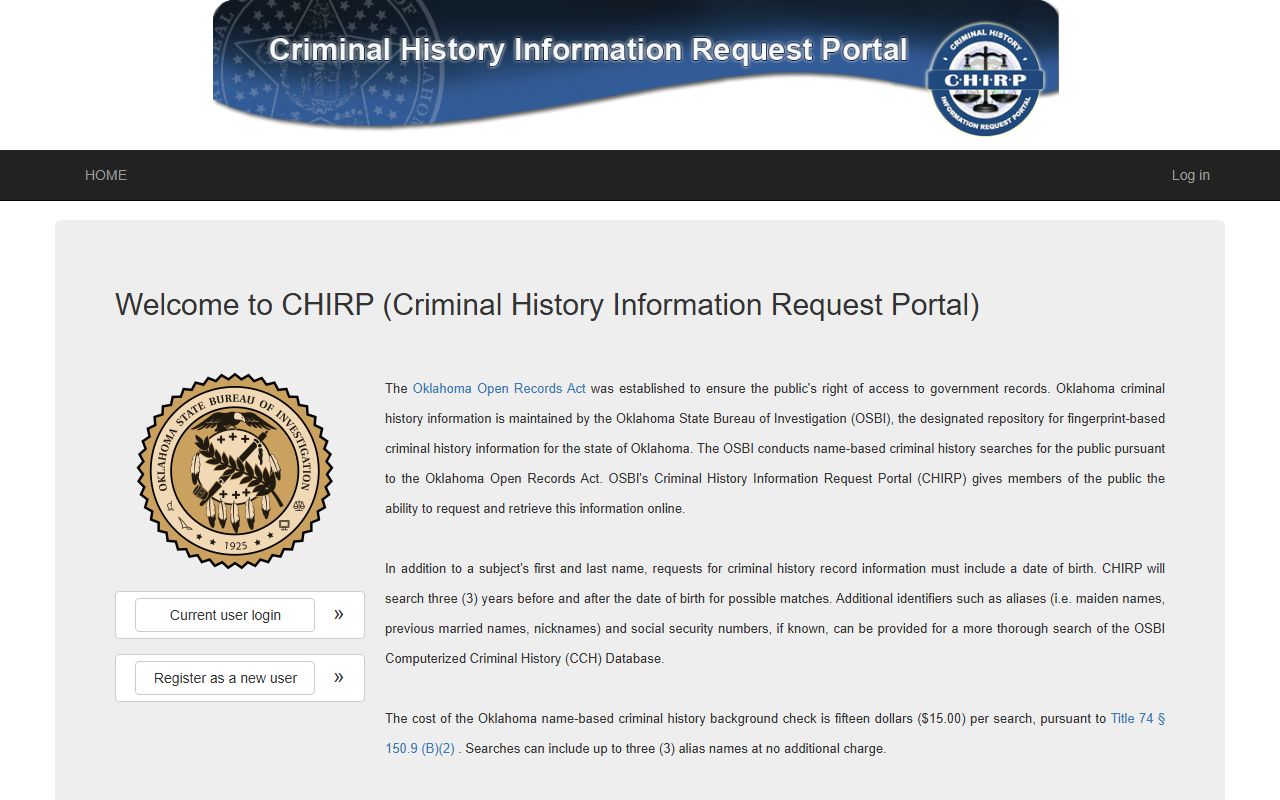
CHIRP results can reveal arrest records tied to warrant execution, providing context beyond what standard OSCN docket searches show.
Oklahoma Department of Corrections Offender Search
The Oklahoma Department of Corrections (ODOC) runs an offender lookup tool that helps when a warrant may have already been served and the person is in state custody. ODOC oversees more than 24 state facilities and manages roughly 24,000 inmates. Searching by name or DOC number returns custody status, facility location, sentence information, and projected release dates. The ODOC is headquartered at 3400 North Martin Luther King Avenue, Oklahoma City, OK 73111-4298, phone 405-425-2500.
This resource matters most for warrants connected to probation or parole violations. If someone under supervision picks up a new charge or absconding warrant, their ODOC status may reflect a change. The offender lookup won't confirm an active warrant directly, but it can show if a person is already detained, which helps determine whether a warrant has been served.
The Department of Corrections website provides the offender lookup tool along with facility information and inmate contact procedures.
ODOC records update as inmates move between facilities, change custody status, or are released under supervision.
On Demand Court Records as a Search Resource
Oklahoma has a second court records platform called On Demand Court Records, or ODCR. It works alongside OSCN and serves courts that participate in the ODCR network. Basic docket searching is free at www1.odcr.com. A subscription unlocks advanced search options and document access for $5 per month. ODCR also handles online payment of fines and fees, which is useful when resolving bench warrants tied to unpaid court obligations.
As of the most recent updates, 70 courts were current in the ODCR system. ODCR complements OSCN for counties that participate in one system but not the other. The system tracks which courts have updated their records and how recently, so you can gauge data freshness before relying on results.
The ODCR platform provides court record access and online payment processing for participating Oklahoma courts, working alongside the OSCN database to improve coverage.
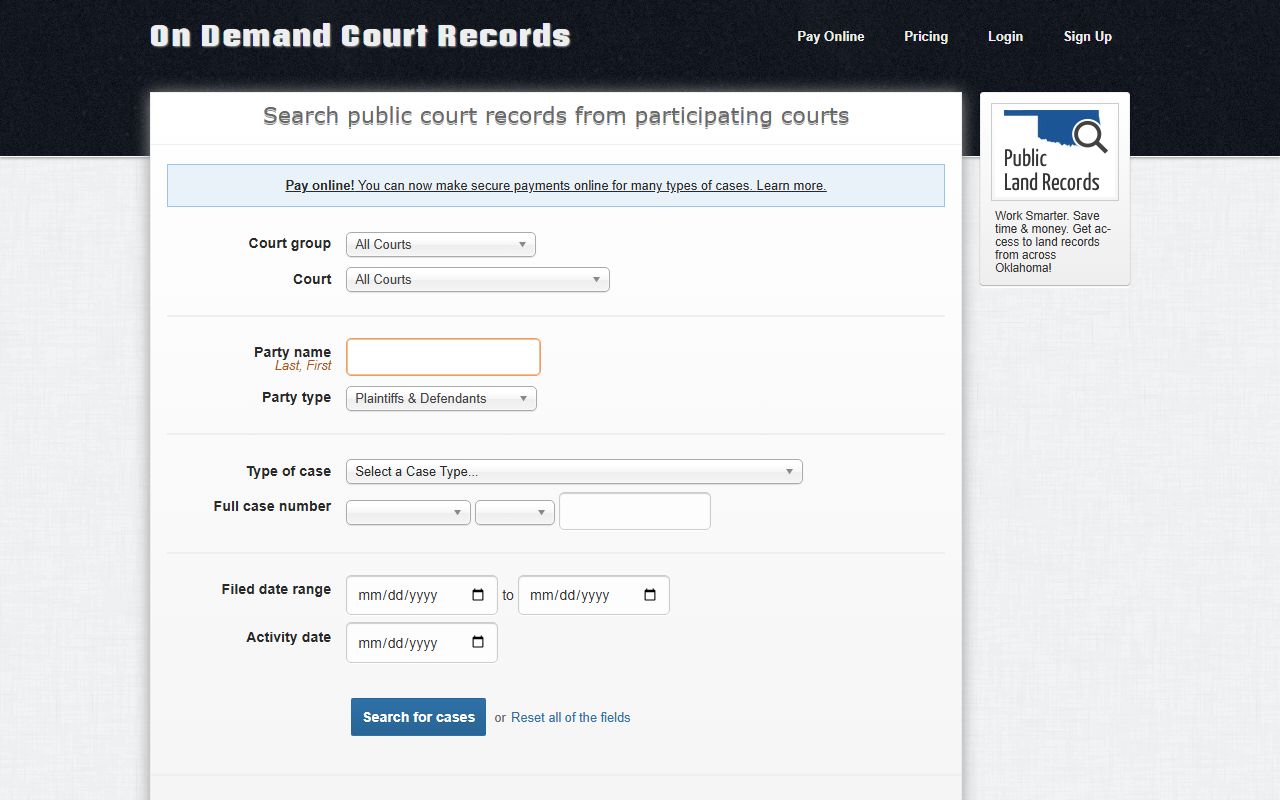
ODCR's payment tools let people resolve certain bench warrants tied to unpaid fines without making a courthouse visit.
Oklahoma Warrant Laws and Statutes
Oklahoma warrant law comes from Title 22 of the Oklahoma Statutes, which governs criminal procedure statewide. Several sections define how warrants are issued, executed, and returned to the court. Understanding these rules helps you know what makes a warrant valid and what rights are involved.
Section 22-173 sets the standard for issuing an arrest warrant. A magistrate must examine the complainant and any witnesses under oath. If probable cause exists, the magistrate issues a signed warrant directed to any peace officer. Section 22-174 requires that warrants be directed to and executed by peace officers. Section 22-175 states that warrants can be served in any county in Oklahoma, not just the one where they were issued. This means a warrant from Tulsa County can be executed anywhere in the state.
For felony cases, Section 22-176 requires the arresting officer to bring the defendant before the issuing magistrate or another magistrate in the county. Closed-circuit television may be used for this appearance if the system allows two-way audio and video. Section 22-456 covers bench warrant form requirements for felony cases, specifying that the document must include the county name, defendant name, charge, case number, issuance date, and the judge's signature.
Search warrant rules fall under Sections 22-1221 through 22-1241. These define the probable cause threshold, the required form of the warrant, service procedures, the 10-day execution window, and the return process. Under Section 22-1233, officers must return the warrant to the issuing magistrate after execution with a written inventory of all seized property. This inventory must be made in the presence of the person searched or the warrant applicant if they are present.
Oklahoma also passed updates to criminal procedure in 2025. Changes under Section 710 allow defendants to issue subpoenas duces tecum directly to businesses or commercial entities. Changes to Section 2002 require law enforcement to provide discovery records to prosecutors within specified timeframes, with prosecutors then required to make those records available to defendants. Failure to comply can carry penalties.
The Justia code page for Section 22-1233 covers search warrant return requirements in Oklahoma, including inventory and witness procedures.
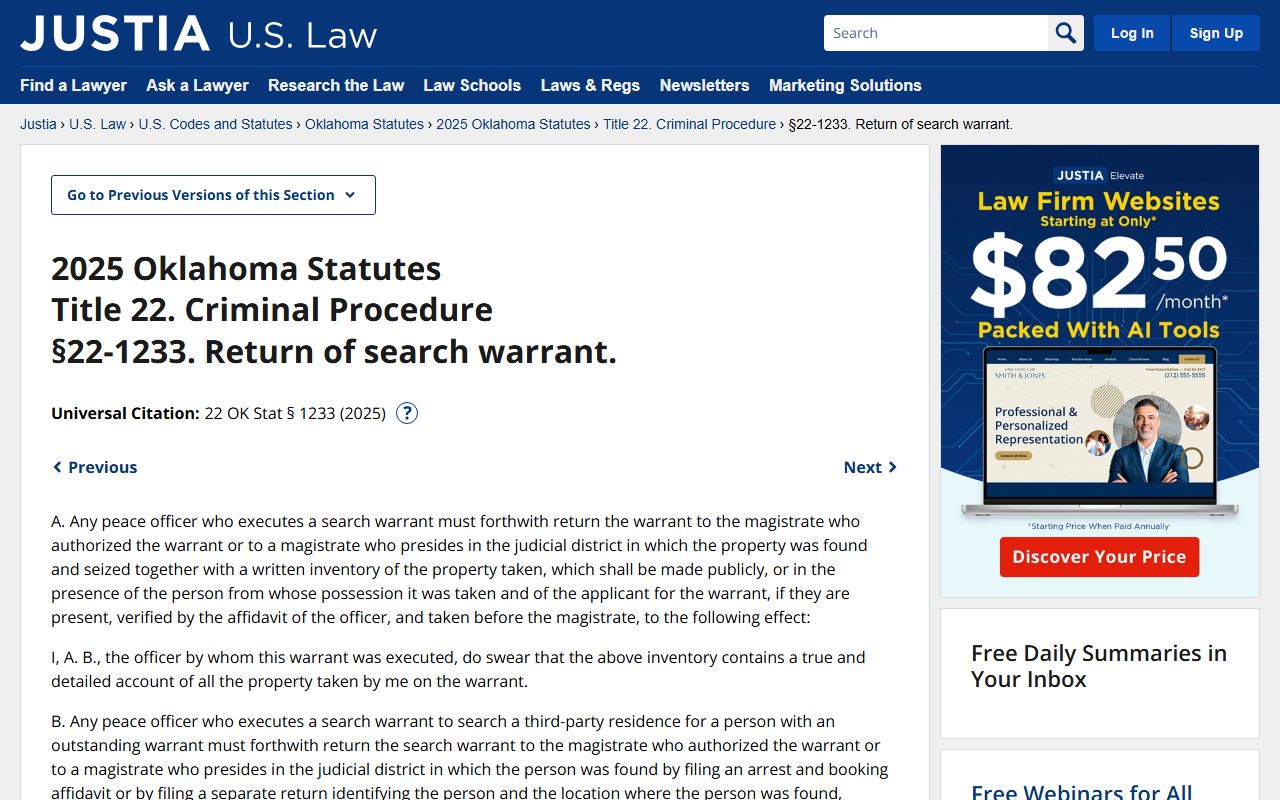
Failing to properly return a search warrant with a written inventory can result in suppression of any evidence seized during that search.
Oklahoma's 2025 criminal procedure statute updates reflect ongoing changes to how warrant-related discovery records are shared between law enforcement, prosecutors, and defense counsel.
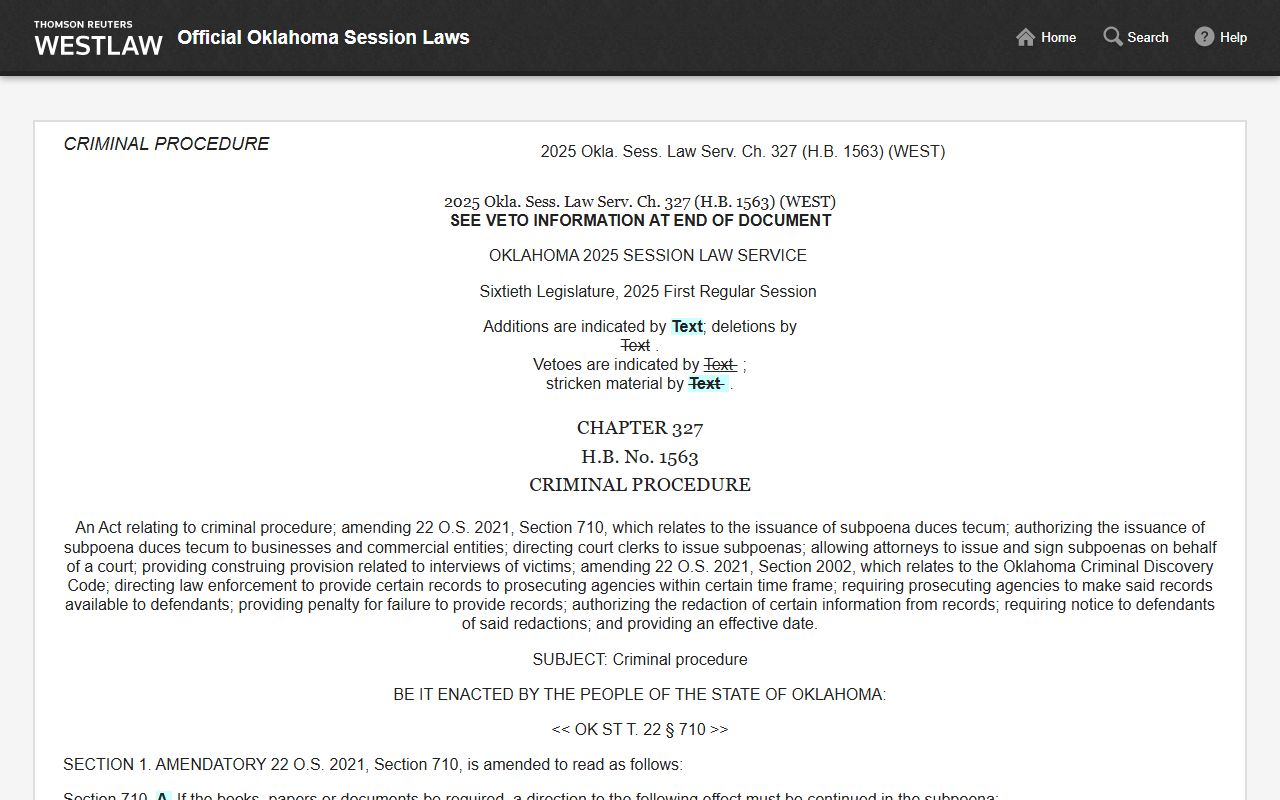
These legislative updates show Oklahoma's continued work to keep warrant procedures current with both constitutional standards and practical court needs.
Note: Under Title 51, Section 24A.8 of the Oklahoma Open Records Act, law enforcement agencies may restrict access to warrant records when releasing them would compromise an active investigation or reveal confidential informant identities.
Clearing and Sealing Warrant-Related Records
Oklahoma offers two main paths for sealing criminal records. Section 18 expungement provides a full seal of both the arrest and court record, making it inaccessible to the public. This option is available for dismissals, acquittals, and qualifying convictions. Section 991(c) expungement applies to completed deferred sentences, updating the case disposition to a dismissal. It is less complete than Section 18 since arrest records may remain partially visible. Both paths require an active warrant to be cleared before expungement will be granted.
Eligibility for most expungements requires a five-year waiting period from the last conviction or sentence completion. The person must have no subsequent arrests during that window and must have finished all fines, supervision requirements, and restitution. Filing costs typically include a $150 non-refundable OSBI fee, court filing fees ranging from $50 to $200, and attorney fees if you hire counsel. Once a court enters the expungement order, the person may state that no such action ever occurred. Only the person, the Attorney General, or a prosecuting agency can then petition for access to the sealed record.
This guide at www-oscn.us covers Oklahoma arrest records and explains the differences between Section 18 and Section 991(c) expungement options.
Expungement removes records from public view but does not automatically resolve active warrants, which must be cleared through the issuing court before any sealing can occur.
Legal Help for Oklahoma Warrant Matters
Several resources exist for people dealing with warrants in Oklahoma. The state bar association, public defender offices, and legal aid organizations can help you understand your options and navigate the court process.
The Oklahoma Bar Association provides a lawyer referral service that connects people to criminal defense attorneys who handle warrant matters, bench warrant resolutions, and criminal case defense. Many counties maintain public defender offices for those who qualify based on income. For federal warrants in Oklahoma City, the Federal Public Defender's Office is located at 215 Dean A. McGee Avenue, Suite 109, phone (405) 609-5930. In Tulsa, the Northern District Federal Public Defender can be reached through the U.S. District Court at 333 W. 4th Street, (918) 699-4700. U.S. Marshals handle federal warrant execution at the federal courthouse in each district.
The guide at www-oscn.us also covers self-help research strategies for tracking case progress and warrant status through OSCN.
The OSCN Research Guide at oscn.online explains advanced search strategies for power users who need to track multiple cases or compare warrant status across counties.
Building a tracking spreadsheet with case numbers, counties, and next hearing dates makes it easier to monitor warrant status for multiple people or cases over time.
The Oklahoma Court Case Finder provides court contact information and additional guidance for finding records across different Oklahoma court systems.
For records that do not appear in OSCN, visiting the county clerk's office in person remains the most reliable method for warrant status verification.
Browse Oklahoma Warrant Records by County
Each of Oklahoma's 77 counties has its own District Court and Sheriff's Office. Both maintain warrant records specific to that county. Select a county below to find local search resources, courthouse contacts, and sheriff office details for warrant lookups in that area.
Warrant Records in Major Oklahoma Cities
Oklahoma's major cities each maintain municipal courts that handle city-level warrants separate from county district court warrants. Select a city to find municipal court contacts, police department resources, and county warrant information for that area.